The Ultimate Career Criminal Gets a Divine Intervention
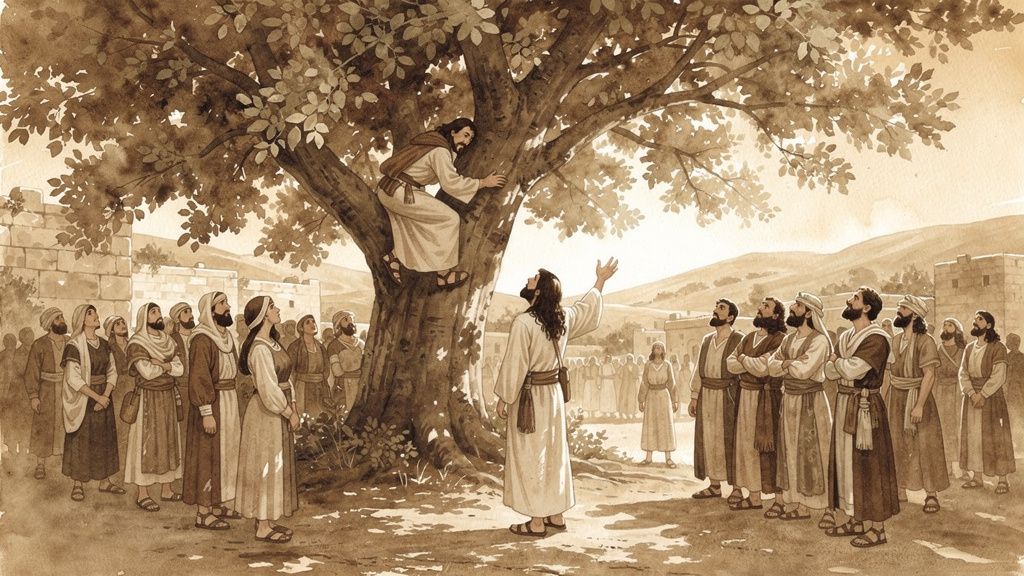
In the bustling streets of ancient Jericho, a man climbed a tree—not for childhood fun, but out of desperate curiosity. Zacchaeus, chief tax collector and likely one of the wealthiest men in town, had heard about a rabbi named Jesus. Little did he know that this moment would completely transform his life.
For those of us living in Jakarta's competitive urban environment, Zacchaeus's story hits remarkably close to home. Here was a man who had "made it" by society's standards—wealthy, powerful, influential. Yet something was missing, and that something would change everything.
The Corruption That Isolates
Understanding Zacchaeus's World
Tax collectors in first-century Palestine weren't just unpopular—they were despised. They worked for the occupying Roman government, often extorting their own people for personal gain. Zacchaeus wasn't just any tax collector; he was the chief tax collector, meaning he had built an entire network of corruption.
Sound familiar? In Jakarta's fast-paced business environment, many professionals face similar ethical dilemmas daily. The pressure to succeed, to climb the corporate ladder, to provide for family in an expensive city—these pressures can lead to compromises we never thought we'd make.
The Loneliness of Success
Despite his wealth, Zacchaeus was profoundly isolated. The text tells us he was "short in stature" and had to climb a tree just to see Jesus—a detail that reveals both his physical limitation and his social isolation. No one would make room for him in the crowd.
This is the paradox of success without integrity: you can have everything and still have nothing that matters. In a city like Jakarta, where networking and relationships are crucial, imagine the loneliness of being successful but hated, wealthy but friendless.
The Radical Grace That Transforms
Jesus' Counter-Intuitive Choice
What happens next defies all expectations. Jesus, surrounded by crowds of respectable people, looks up at this despised tax collector and says, "Zacchaeus, hurry and come down, for today I must stay at your house" (Luke 19:5).
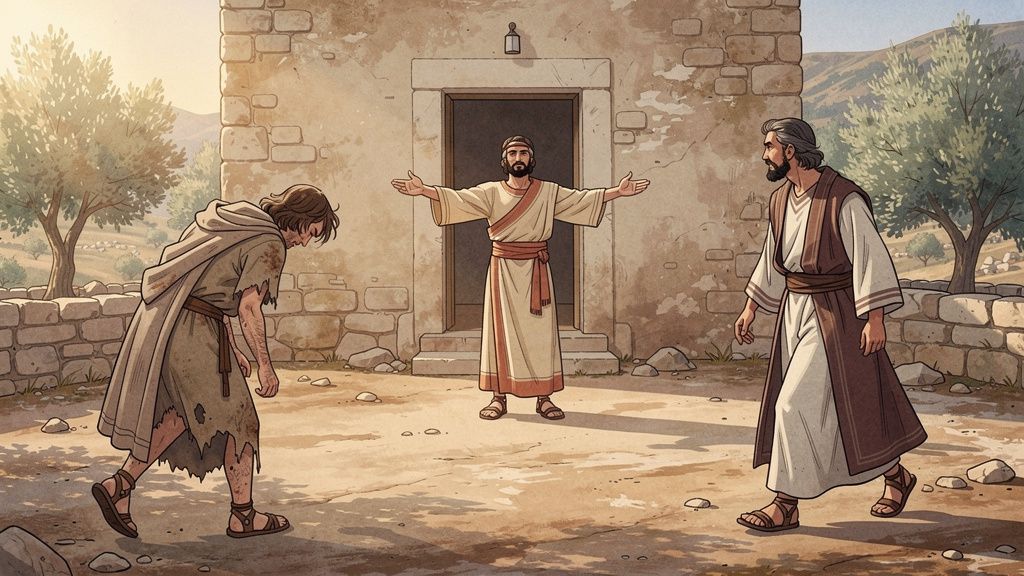
The crowd was indignant. Of all the houses in Jericho—why the corrupt tax collector's? This is the scandal of grace: Jesus doesn't wait for us to clean up our act first. He comes to us in our mess, in our compromise, in our failure.
For Jakarta professionals struggling with ethical compromises, this is profound news. You don't have to become perfect before Jesus accepts you. His love comes first, and transformation follows.
The Response of a Transformed Heart
Zacchaeus's response is immediate and radical: "Behold, Lord, half of my possessions I give to the poor, and if I have defrauded anyone of anything, I restore it fourfold" (Luke 19:8).
Notice what doesn't happen: Jesus doesn't demand this response. Zacchaeus offers it freely. This is what true transformation looks like—not external compliance, but internal revolution. Grace doesn't make us careless; it makes us generous.
What This Means for Modern Jakarta
Beyond Moral Improvement
The story of Zacchaeus isn't primarily about moral improvement—it's about gospel transformation. The difference is crucial:
- Moral improvement says: "Be better, try harder, make better choices."
- Gospel transformation says: "You are loved first, and this love changes everything."
Many Jakarta Christians get caught in the trap of moralistic religion, thinking that Jesus mainly came to make us better people. But the gospel is much more radical: Jesus came to make dead people alive.
Practical Implications for City Life
In Jakarta's context, where corruption and compromise are common, Zacchaeus's story offers several insights:
First, integrity isn't about being perfect—it's about being honest about our imperfections and allowing Jesus to transform us from the inside out.
Second, true change happens not through willpower but through encountering grace. When we truly understand how much we've been forgiven, generosity flows naturally.
Third, transformation affects our relationships with both God and others. Zacchaeus's response involved both worship ("Lord") and restitution (repaying those he'd wronged).
At GKBJ Taman Kencana, we believe this transformation is still happening today. In our Sunday service Jakarta gatherings, we regularly see how the gospel changes lives—not through guilt and pressure, but through grace and love.
The Community That Welcomes Zacchaeus
Creating Space for Transformation
One beautiful aspect of this story is how it challenges the religious community. The crowd grumbled about Jesus eating with a sinner, but Jesus saw potential where others saw only corruption.
This challenges us as a church community: Are we creating space for modern-day Zacchaeuses? Are we welcoming those who've made ethical compromises, or are we like the crowd, keeping them at arm's length?
In our small group community church gatherings, we strive to be a place where transformation can happen—where people can be honest about their struggles without fear of judgment.
The Joy of Salvation
Jesus' final words in this story are telling: "Today salvation has come to this house... For the Son of Man came to seek and to save the lost" (Luke 19:9-10).
Salvation isn't just about going to heaven someday—it's about experiencing God's transforming presence today. Zacchaeus experienced this immediately: his relationships were restored, his purpose was renewed, and his priorities were reordered.
A Personal Invitation
Perhaps you recognize yourself in Zacchaeus—successful on the outside but empty within, compromised in ways that have isolated you from others, curious about Jesus but unsure if someone like you could be welcomed.
The good news is that Jesus is still looking up into trees, still inviting himself into the homes of the compromised and corrupt, still bringing transformation through radical grace.
The question isn't whether you're good enough for Jesus—the question is whether you're ready to let His love transform you from the inside out. At GKBJ Taman Kencana, we've seen this transformation happen countless times, and we'd love to walk alongside you in this journey.
In a city where success often comes at the cost of integrity, Jesus offers something better: a love that transforms, a community that welcomes, and a purpose worth living for. Just ask Zacchaeus—he'll tell you it's worth coming down from whatever tree you're hiding in.