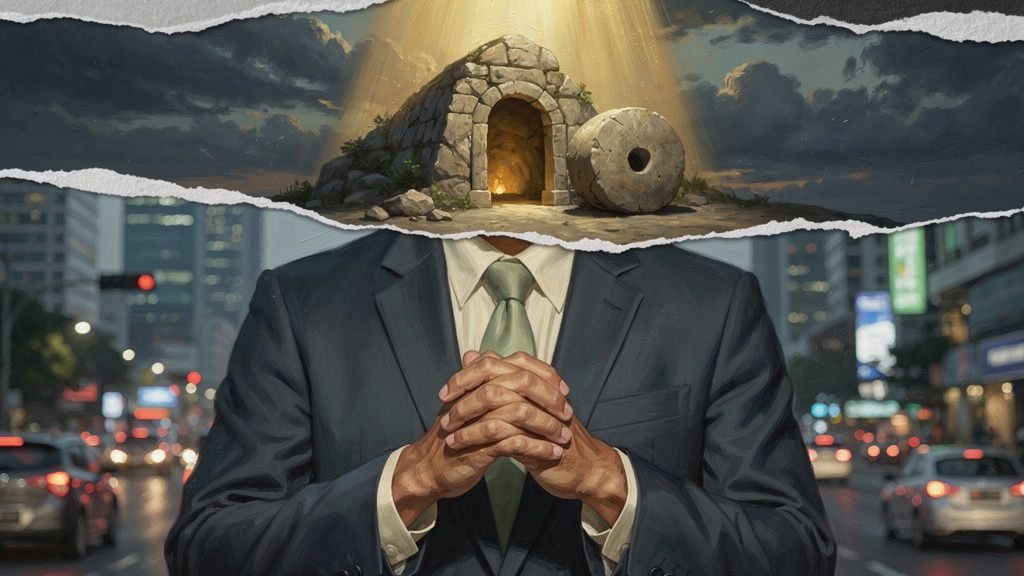
The startup failed. The promotion went to someone else. The relationship ended. The medical results weren't what you hoped. In Jakarta's relentless pursuit of success, crushed dreams aren't just personal tragedies—they feel like public failures in a city that never stops moving forward.
The Weight of Shattered Expectations
Living in Jakarta means living with pressure. From the traffic-clogged streets of Cengkareng to the gleaming towers of SCBD, this city breathes ambition. We're surrounded by success stories, Instagram highlights, and the constant message that we should be achieving more, earning more, becoming more.
When our dreams collapse, it's not just disappointment we feel—it's shame. In a culture that often equates worth with achievement, a failed dream can feel like a failed life. The question haunts us: "If I can't make this work, what does that say about me?"
But what if our deepest problem isn't our circumstances, but where we've placed our hope?
The Idol of Achieved Dreams
Here's what's counter-intuitive about the Gospel: it suggests that sometimes our greatest mercy is not getting what we think we need. Dreams, even good ones, can become functional saviors—things we believe will finally make us acceptable, secure, or significant.
Consider the ambitious professional climbing Jakarta's corporate ladder. The dream isn't just about money; it's about proving worth, gaining approval, securing identity. When that dream shatters, the pain reveals how much weight we'd placed on it.
The Gospel exposes this as a form of idolatry. We've asked our dreams to do what only God can do—give us ultimate meaning and security. No wonder the weight feels crushing when they fall.
Hope That Doesn't Depend on Performance
Romans 5:3-5 offers a radically different perspective: "Not only that, but we rejoice in our sufferings, knowing that suffering produces endurance, and endurance produces character, and character produces hope, and hope does not put us to shame."
Notice the progression. Paul doesn't minimize suffering—he acknowledges it. But he shows how God works through disappointment to produce something our achievements never could: a hope that "does not put us to shame."
This isn't positive thinking. It's not "everything happens for a reason." It's the recognition that our security doesn't depend on our dreams coming true, but on Christ's dream for us already being fulfilled at the cross.
The Greater Dream Already Accomplished
Here's the Gospel's surprising comfort: while you were still figuring out your dreams, God was accomplishing His. While you were still failing and struggling, Christ was succeeding on your behalf. The greatest dream—reconciliation with God, acceptance, love, purpose—has already been achieved for you.
This doesn't make earthly disappointments painless, but it changes their meaning. They become opportunities to discover that our true identity isn't tied to what we accomplish, but to what Christ has accomplished for us.
Living with Open Hands in Jakarta
This Gospel perspective transforms how we pursue dreams in a city like Jakarta. We can work hard without being driven by desperation. We can pursue goals without being crushed by setbacks. We can invest in relationships without demanding they complete us.
The youth group Jakarta communities in churches across the city are learning this: when your ultimate acceptance is secure in Christ, you're free to take risks, serve others, and even fail forward without losing your sense of worth.
Practical Hope for Practical People
What does this look like practically? It means:
- Grieving honestly when dreams die, without pretending it doesn't hurt
- Examining what we expected our dreams to provide that only God can give
- Finding identity in Christ's love rather than in our achievements
- Serving others even when our own lives feel uncertain
- Remaining open to new dreams while holding them lightly
At our church in Jakarta, we've seen this transformation repeatedly. The executive who lost everything but found peace. The student who didn't get into their dream university but discovered their true calling. The entrepreneur whose business failed but whose relationships deepened.
The Hope That Never Disappoints
The hope Paul describes isn't wishful thinking—it's confidence in God's character and promises. It's hope grounded not in what might happen, but in what already has happened. Christ has died for our sins, risen for our justification, and is preparing a place for us.
This hope doesn't guarantee our earthly dreams will come true, but it promises something better: that we are loved, accepted, and secure regardless of what happens to our plans.
In Jakarta's fast-paced, success-driven environment, this is revolutionary. It's permission to be human, to fail, to dream again—all while resting in an acceptance that no achievement could ever earn.
Your dreams may have shattered, but your hope doesn't have to. The God who weaves beauty from brokenness is writing a better story than you could have imagined—one where the ending is already secure, and every chapter, even the painful ones, serves His good purposes.
Whether you're navigating career disappointments in West Jakarta or anywhere else in this city, know that your value doesn't depend on your victories. It depends on a Savior who made you His victory, and that's a hope that will never, ever disappoint.
If you're walking through the pain of shattered dreams and want to explore what this hope looks like in community, we invite you to join us at GKBJ Taman Kencana, where real people find real hope in the unchanging love of Christ.