The Invisible Reality in Our Gleaming City
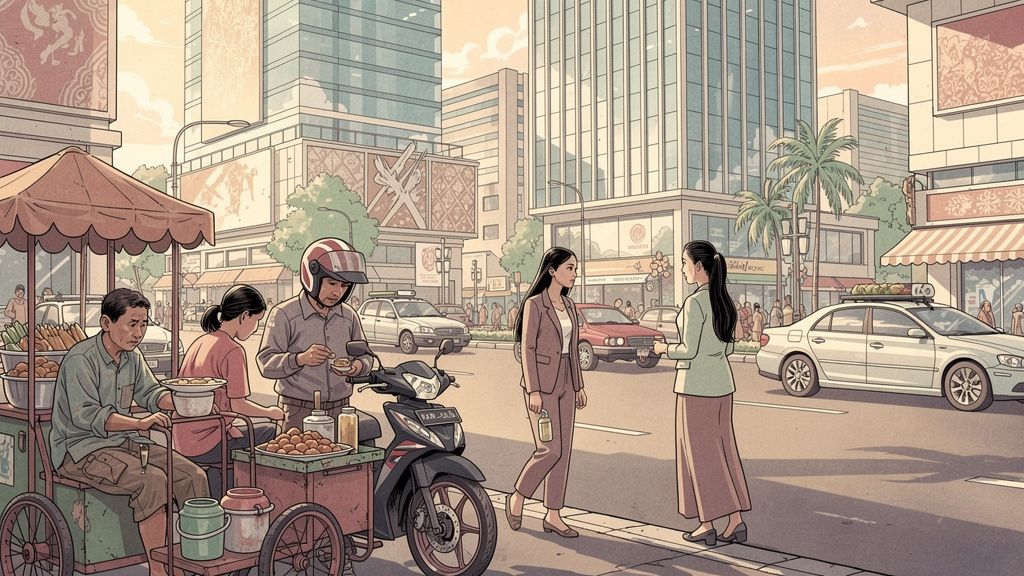
Walk through Jakarta's business district and you'll see soaring towers, luxury malls, and endless traffic jams filled with expensive cars. But look closer—really look—and you'll notice the street vendors struggling to make ends meet, the ojek drivers working 12-hour days, the domestic helpers walking to the bus stop before dawn.
Jakarta's rapid development has created a paradox: unprecedented wealth alongside persistent poverty. While some of us debate which Sunday service Jakarta offers the best coffee, millions in our city wonder where their next meal will come from. This isn't someone else's problem—it's ours.
Why Poverty Makes Us Uncomfortable
Let's be honest about why urban poverty disturbs us. It's not just the visible suffering, though that's heartbreaking enough. It's what poverty reveals about the systems we benefit from and the inequality we often unconsciously perpetuate.
In our success-driven culture, we've internalized the lie that prosperity equals God's blessing and poverty indicates spiritual or moral failure. We live in gated communities, send our children to international schools, and shop in air-conditioned malls—all while telling ourselves that the poor just need to "work harder."
But the gospel shatters this comfortable theology. Jesus himself chose poverty, born in a stable to working-class parents in an occupied territory. The Son of God experienced economic vulnerability, making him intimately acquainted with the struggles of Jakarta's urban poor.
The Counter-Intuitive Call of Christ
Here's where the gospel becomes beautifully counter-intuitive: Jesus calls the economically blessed not to feel guilty, but to find true joy through generous living. The path to abundance isn't accumulation—it's distribution.
Consider the parable of the rich man and Lazarus (Luke 16:19-31). The rich man's sin wasn't his wealth but his blindness to the suffering at his gate. He lived as if Lazarus didn't exist. Sound familiar? How often do we drive past the same street children, domestic helpers, or construction workers without really seeing them?
The gospel doesn't demand we become poor, but it does require we become poor in spirit—recognizing our dependence on God's grace and our responsibility to our neighbors.
Beyond Charity: Gospel-Driven Justice
Most Christian church West Jakarta congregations are generous with charitable giving. We collect donations, organize food drives, and volunteer at orphanages. This is good, but the gospel calls us deeper.
True gospel response to poverty addresses both immediate needs and systemic issues. It means asking uncomfortable questions: Why do our domestic helpers work for wages that barely cover basic needs? How do our consumption patterns contribute to inequality? What would it look like for our businesses to prioritize fair wages over maximum profits?
This isn't about embracing guilt—it's about embracing the freedom that comes from aligning our lives with God's heart for justice. The prophets consistently declare that true worship includes caring for the marginalized (Isaiah 58:6-7, Micah 6:8).
Living Differently in Jakarta's Context
So what does faithful urban discipleship look like in West Jakarta? Here are counter-cultural ways to engage:
Economic Relationships
Pay your domestic helpers, drivers, and service providers fair wages—not just market rates but living wages that honor their dignity. Treat them as partners in your household, not invisible servants.
Community Investment
Instead of moving to more expensive neighborhoods as your income grows, consider staying and investing in your community. Support local businesses owned by working-class families. Choose pemuridan Kristen that includes practical service to your immediate neighbors.
Hospitality Revolution
Open your homes to people from different economic backgrounds. The early church's radical hospitality broke down social barriers (Acts 2:44-47). Your dinner table can be a place of reconciliation in a divided city.
Advocacy and Voice
Use whatever platform you have—professional networks, social media, community organizations—to amplify the voices of the economically vulnerable. Support policies that address housing, transportation, and employment issues affecting Jakarta's urban poor.
The Joy Hidden in Sacrifice
Here's the gospel surprise: when we live with open hands toward the poor, we discover riches money can't buy. We experience the joy of meaningful relationships across economic lines. We find purpose beyond career advancement. We taste the kingdom of heaven, where the last are first and the powerless are lifted up.
This doesn't happen overnight or without struggle. It requires ongoing conversion of our hearts, minds, and wallets. But Christ promises that as we lose our lives for his sake and the gospel's, we'll find life abundantly (Mark 8:35).
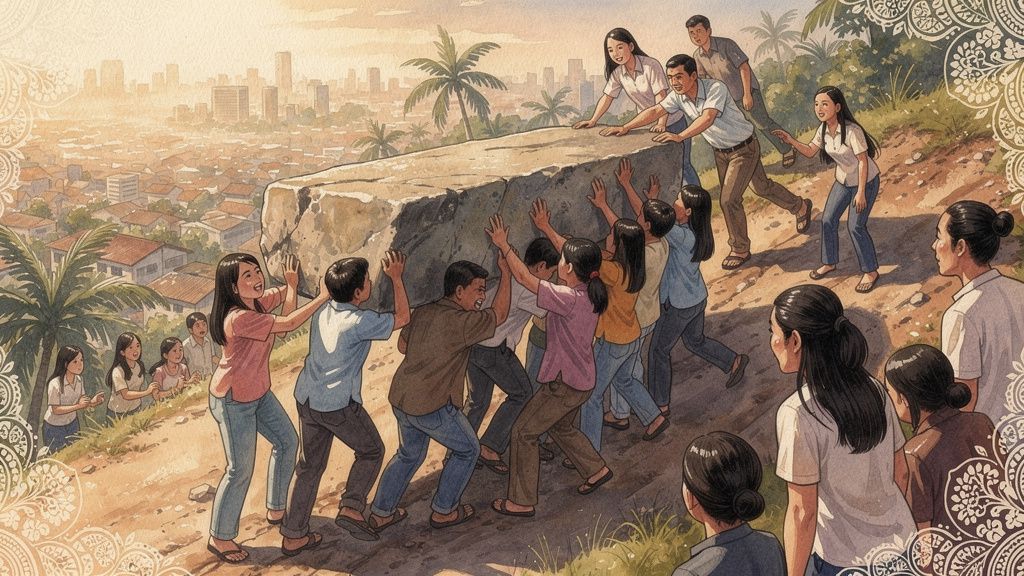
The poor in Jakarta aren't problems to be solved—they're neighbors to be loved, siblings to be embraced, and teachers who can show us what faith really looks like when survival depends on God's daily provision.
An Invitation to Gospel Community
At GKBJ Taman Kencana, we're learning what it means to be a church that sees and serves our entire community. We invite you to join us—not because we have all the answers, but because we believe the gospel is big enough to address Jakarta's deepest inequalities.
The poor will always be with us (Matthew 26:11), but that's not resignation—it's an invitation to ongoing relationship and service. In a city where loneliness and inequality seem overwhelming, God is creating communities of radical love that offer hope to all.
Come as you are—successful or struggling, comfortable or questioning. Together, let's discover how the gospel transforms not just individual hearts, but entire communities. Visit our Ministries to see how you can get involved, or Contact Us to learn more about our community outreach initiatives.
In Christ's love, even Jakarta's most persistent problems become opportunities for God's kingdom to break through.