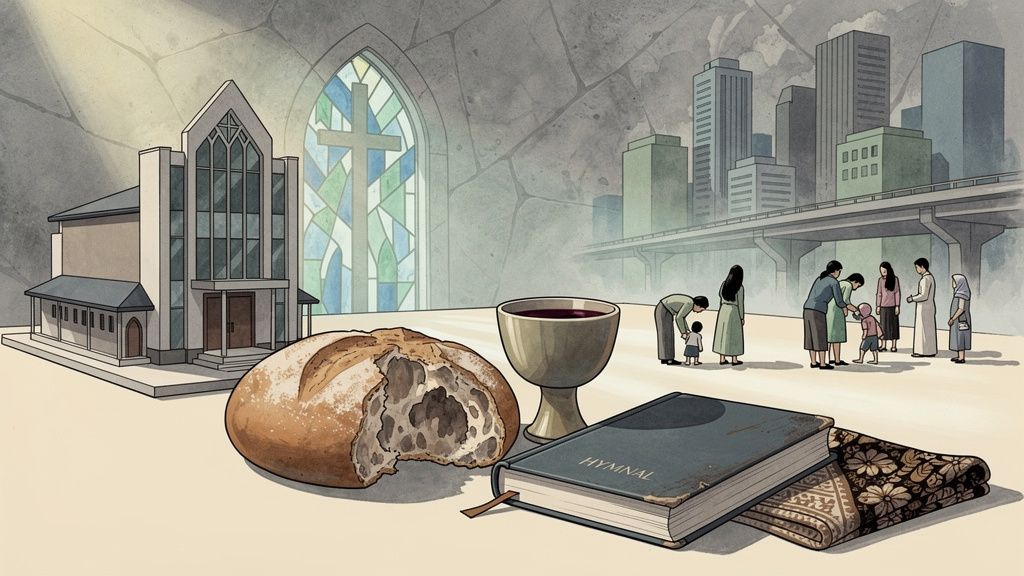
Living as Christians in Jakarta, we find ourselves at the crossroads of ancient traditions and modern globalization. Our city pulses with diverse cultures, values, and worldviews that often clash with biblical truth. How should the church respond? The temptation is to swing between two extremes: either surrender completely to cultural trends or stand in harsh judgment against them. But the gospel offers us a surprising third way.
The Two Dangerous Extremes
The Surrender Trap
Some churches, wanting to stay relevant in West Jakarta's cosmopolitan environment, gradually accommodate every cultural shift. They water down biblical truth to avoid offense, reducing Christianity to mere positive thinking or social activism. This isn't love—it's abandonment. When we surrender biblical truth for cultural acceptance, we rob people of the very thing they need most: the transforming power of the gospel.
Consider how this plays out in our context. Jakarta's success-driven culture promises fulfillment through achievement and wealth. Churches that fully embrace this message become indistinguishable from motivational seminars, offering technique without transformation, methods without the cross.
The Judgment Trap
Other churches respond by building walls, condemning everything outside their doors. They mistake harshness for holiness, believing that the louder they denounce culture, the more faithful they are. But this approach drives people away from Jesus rather than drawing them near.
In Jakarta's diverse religious landscape, this judgmental stance only reinforces stereotypes about Christianity being intolerant and irrelevant. Worse, it misrepresents the heart of God, who "did not send his Son into the world to condemn the world, but to save the world through him" (John 3:17).
The Gospel's Counter-Intuitive Way
The gospel shows us something radically different. Jesus was neither a cultural accommodator nor a cultural warrior. He was a cultural missionary—engaging deeply while remaining distinct, loving genuinely while speaking truth.
Jesus' Model in Action
Look how Jesus interacted with the Samaritan woman (John 4). He didn't ignore her cultural background or judge her moral failures. Instead, he engaged her world thoughtfully, addressed her deepest needs compassionately, and offered her living water that transcended cultural boundaries. He was fully present in her culture while remaining fully committed to truth.
This is the model for churches in Jakarta today. We must be fully present in our city—understanding its rhythms, its dreams, its pain—while remaining anchored in gospel truth.
Practical Gospel Engagement
Understanding Before Confronting
Before we can speak meaningfully into Jakarta's culture, we must understand it. Why do young professionals work 70-hour weeks? What drives the obsession with social media validation? What fears lie beneath the surface of materialism?
The gospel teaches us that these cultural phenomena often reveal deep human longings—for significance, security, love—that only Christ can ultimately satisfy. Our ministries at GKBJ Taman Kencana seek to address these real needs with gospel hope, not empty judgment.
Engaging with Compassion
True gospel engagement means seeing people as Jesus sees them: harassed and helpless, like sheep without a shepherd (Matthew 9:36). When we encounter cultural practices that concern us, our first response should be compassion, not condemnation.
For instance, Jakarta's epidemic of anxiety and depression isn't something to judge but something to address with the comfort of the gospel. Mental health struggles often reflect the spiritual poverty of a culture that promises everything but delivers emptiness.
The Power of Small Group Community
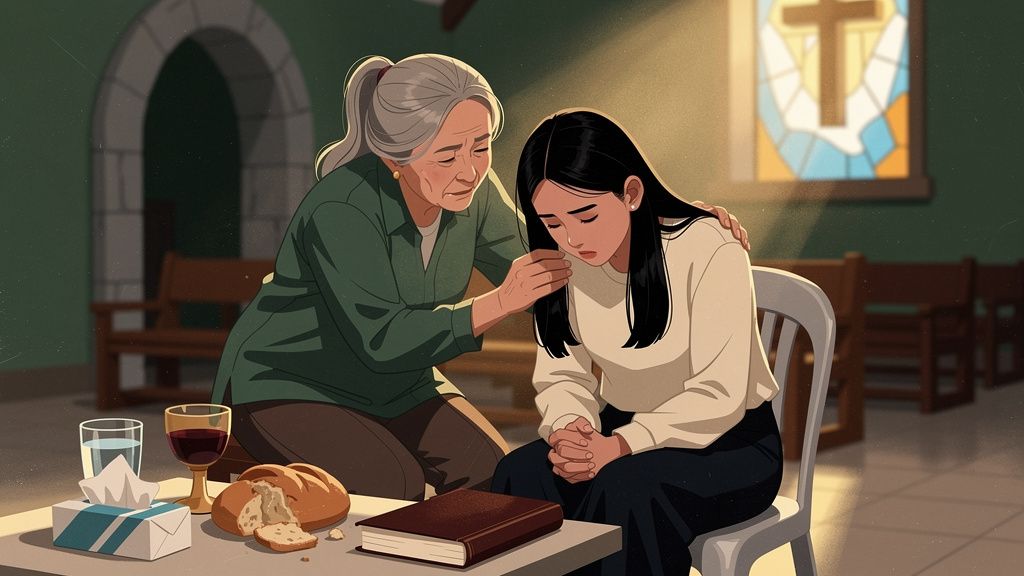
In this cultural engagement, the local church becomes crucial. Our small group community church model creates spaces where gospel transformation happens naturally. Here, people from different backgrounds can wrestle with cultural questions in the safety of Christian love.
When someone struggles with work-life balance in Jakarta's demanding environment, they don't need a lecture about priorities—they need a community that demonstrates what it means to find identity in Christ rather than career success.
Spiritual Growth Through Cultural Engagement
Paradoxically, engaging culture thoughtfully actually accelerates our spiritual growth. When we're forced to articulate why our faith matters in Jakarta's complex context, we discover depths of gospel truth we might otherwise miss.
The early church faced similar challenges. They had to explain how Jesus was relevant to Greek philosophers and Roman citizens. This didn't weaken their faith—it strengthened it, forcing them to understand more deeply what they believed and why.
Living as Faithful Presence
Timothy Keller often spoke of "faithful presence"—being genuinely committed to a place and its people while maintaining gospel distinctiveness. For GKBJ Taman Kencana, this means being authentically West Jakarta while authentically Christian.
We celebrate what's beautiful in our culture—the warmth of Indonesian hospitality, the value placed on family, the resilience of our people. We also speak truth into what's broken—the corruption that steals from the poor, the materialism that destroys souls, the despair that comes from false promises.
The Hope of Transformation
The gospel doesn't just judge culture; it transforms it. Throughout history, Christianity has been the most powerful force for positive cultural change—not through political power but through changed hearts that change communities.
When Christians in Jakarta live out gospel values—serving the poor, practicing integrity in business, loving across ethnic lines, caring for creation—they become salt and light that slowly but surely transforms their city.
Moving Forward Together
This work of cultural engagement cannot be done alone. It requires a community of believers committed to wrestling with these challenges together. At GKBJ Taman Kencana, we're not just a church that meets on Sundays—we're a community committed to living out the gospel in every corner of Jakarta life.
The gospel gives us confidence to engage culture without fear. We don't have to choose between relevance and truth, between love and faithfulness. In Christ, we can be courageously honest about what's wrong with our culture while being compassionately present with people who are hurting.
As we navigate Jakarta's complex cultural waters, may we remember that our goal isn't to win cultural battles but to win hearts for Jesus. In a city that often feels divided, may our churches be communities where the gospel creates something beautiful—spaces where neither surrender nor judgment reigns, but grace transforms everything it touches.