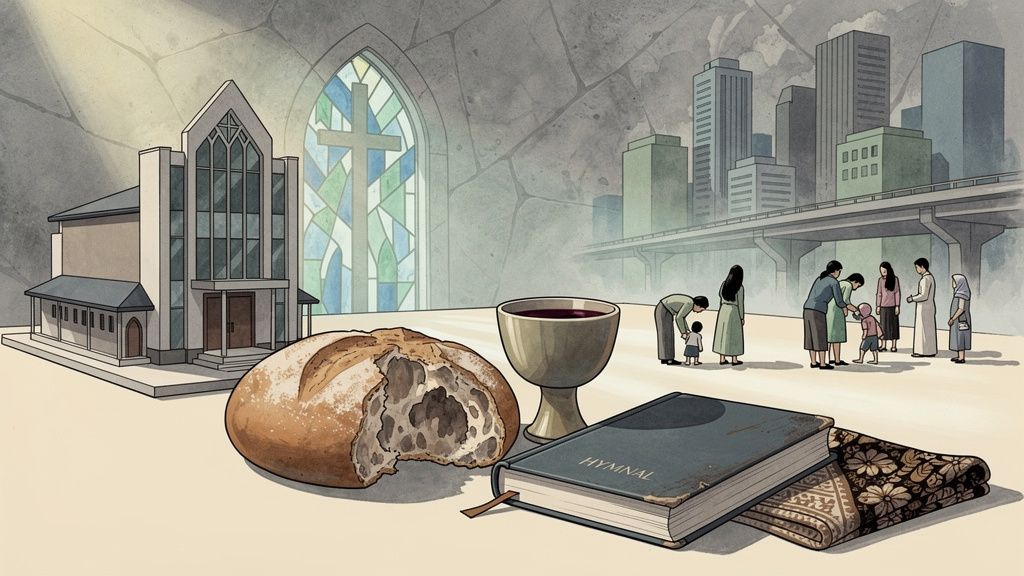
The Paradox of Power in Jakarta's Towers
Amid the hustle and bustle of Jakarta with its towering skyscrapers, we witness an endless drama of power. CEOs racing to reach the top, politicians chasing the highest positions, and even within church environments, we often see struggles for position and recognition. Yet in the midst of all this stands a shocking story from 2000 years ago - a Rabbi who knelt to wash His disciples' feet.
This story isn't merely an inspirational tale. It's a total revolution of how the world understands leadership.
The Night That Redefined Leadership
John 13:1-17 records an astonishing moment. Jesus, acknowledged as Teacher and Lord, took a towel and basin of water. He knelt before His disciples - people who called Him "Rabbi" - and began washing their feet one by one.
Imagine if today a CEO in Jakarta's Sudirman business district suddenly knelt to clean his junior employees' shoes. Or when a senior pastor serves the congregation by cleaning the church toilets. Our reaction might mirror Peter's: "No, Lord! You shall never wash my feet!"
But that's precisely where the miracle of the gospel lies. Jesus didn't wash His disciples' feet because He was weak or inferior. He did it precisely because He is the true Lord.
Upside-Down Leadership: True Power in Service
Power That Empowers, Not Oppresses
In Jakarta's often harsh and hierarchical work culture, we're familiar with "command and control" leadership styles. Superiors give orders, subordinates execute. Power flows from top to bottom, with those at the peak enjoying privileges while those below serve.
Jesus flips this pyramid upside down. "Whoever wants to become great among you must be your servant" (Mark 10:44). This isn't empty rhetoric, but a principle He lived out.
When a leader truly serves, something extraordinary happens: people around them don't feel controlled, but empowered. They don't feel exploited, but valued. This creates a healthy work culture, even amid Jakarta's high-pressure environment.
Revolutionary Humility
Jesus said, "I have set you an example that you should do as I have done for you" (John 13:15). But how can we follow this example without becoming doormats or losing authority?
The key to this paradox lies in proper understanding of our identity. Jesus could serve so humbly precisely because He was so confident in His identity as the Son of God. "Jesus knew that the Father had put all things under his power, and that he had come from God and was returning to God" (John 13:3).
The same applies to us. When we truly understand that we are beloved children of God, secure in His love and calling, we can serve others without fear of losing our dignity. Our worth isn't determined by our position in Jakarta's social hierarchy, but by our identity in Christ.
Practical Applications in Jakarta Life
In the Workplace
Servant leadership in Jakarta's corporate world doesn't mean being weak or passive. It means:
- Developing people over using them: Investing in team members' growth rather than merely extracting their productivity
- Listening before commanding: Taking time to understand before making decisions
- Taking responsibility for failures while sharing credit for success: Protecting your team from blame while highlighting their contributions
- Serving the mission, not your ego: Making decisions based on what's best for the organization and its people, not personal advancement
In the Church
At GKBJ Taman Kencana and churches throughout Jakarta, servant leadership transforms how we approach ministry:
- Leaders who equip rather than control: Empowering others for ministry rather than hoarding responsibilities
- Transparent decision-making: Including the congregation in important discussions rather than making unilateral choices
- Care for the marginalized: Ensuring that those often overlooked - domestic workers, street vendors, the elderly - feel valued and included
- Cross-cultural sensitivity: In Jakarta's diverse community, servant leaders bridge ethnic and economic divides
In the Family
Jakarta families face unique pressures - long commutes, extended family expectations, economic stress. Servant leadership at home means:
- Husbands who serve their wives and children: Not as weakness, but as strength - leading through sacrifice and love
- Parents who listen to their children: Especially important in Indonesian culture where hierarchy is deeply valued
- Adult children who honor aging parents: Serving them practically while respecting their dignity
The Cost and Reward of Servant Leadership
The Cross Behind the Basin
We must not romanticize Jesus' act of foot-washing. It was a preview of the ultimate act of service - His death on the cross. Servant leadership isn't always comfortable or convenient. It requires sacrifice, humility, and often misunderstanding from others who equate gentleness with weakness.
In Jakarta's competitive environment, choosing to serve might seem like career suicide. You might be passed over for promotions, misunderstood by colleagues, or taken advantage of by unscrupulous people. This is the cost of following Jesus' example.
The Promise of True Greatness
Yet Jesus promises something revolutionary: "Whoever wants to be first must be slave of all" (Mark 10:44). This isn't merely a nice sentiment - it's a spiritual law. Those who serve ultimately influence, lead, and create lasting impact.
History bears this out. The most transformational leaders - whether in business, politics, or ministry - have been those who served others' interests above their own. Their influence extends far beyond their titles or tenure.
A Challenge for Jakarta's Leaders
As we navigate Jakarta's complex social and economic landscape, we face a choice. Will we climb the ladder of success by stepping on others, or will we lift others as we rise? Will we use our influence to accumulate power for ourselves, or to empower those around us?
The basin and towel await. Not as symbols of weakness, but as tools of transformation. When we kneel to serve others - whether in our offices in SCBD, our homes in South Jakarta, or our churches throughout the city - we participate in Jesus' ongoing ministry of reconciliation and restoration.
In a city where status often matters more than service, where position trumps purpose, the call to servant leadership isn't just countercultural - it's revolutionary. It's an invitation to experience the upside-down kingdom where the last are first, the servant is greatest, and true power is found in laying down our lives for others.
The question remains: Will you take up the towel?
This message was shared at GKBJ Taman Kencana as part of our ongoing series on Christian leadership in contemporary Jakarta. For more resources on biblical leadership, visit our ministry resources or join us for Sunday service.