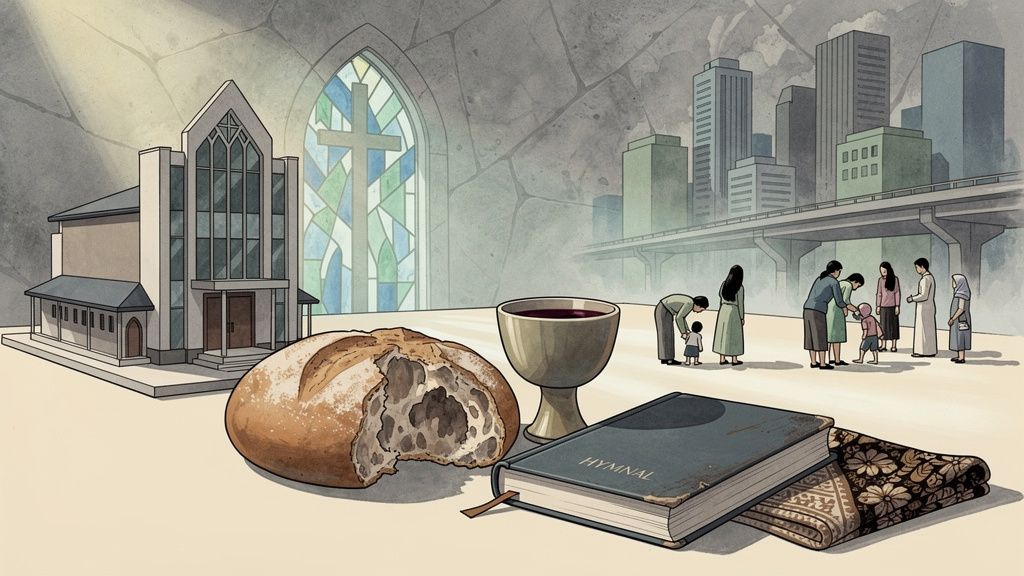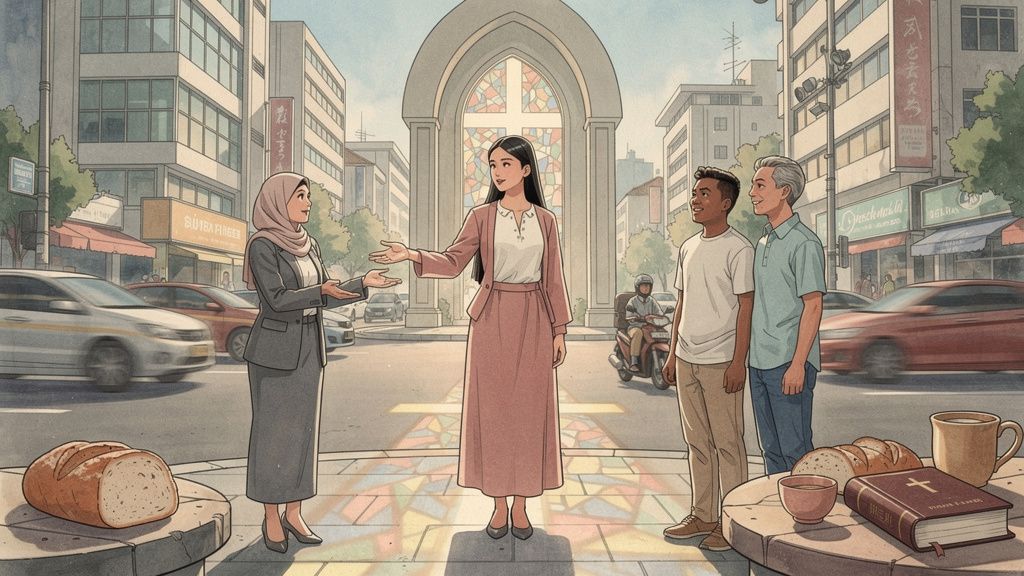
In the bustling multicultural landscape of Jakarta, churches often face a complex dilemma. On one hand, we don't want to lose our Christian identity by becoming overly accommodating to secular culture. On the other hand, we don't want to become a judgmental community isolated from the world that God loves.
How should churches in Jakarta like GKBJ Taman Kencana respond to this tension? The answer isn't as simple as we might think—and that's precisely where the beauty of the Gospel shines brightest.
The Urban Church Dilemma in Jakarta
Living as Christians in Jakarta has never been easy. We interact with Muslim neighbors, non-religious colleagues, and friends who hold different value systems. Every day, we must decide: when to compromise, when to stand firm?
This pressure feels even more intense in the digital age. Social media forces us to take positions on controversial issues. Non-Christian friends question our beliefs. Meanwhile, fellow Christians sometimes accuse us of being too liberal or too conservative.
Surprisingly, Jesus faced the same dilemma—but with a revolutionary approach.
Jesus: The Counter-Intuitive Model
In the Gospels, we see Jesus interacting with Jewish and Roman cultures in surprising ways. He didn't surrender to pressure to adjust His message, but He also didn't judge people who were different from Him.
Notice how Jesus responds to the Samaritan woman at the well (John 4). Culturally, He should have avoided this woman—she was Samaritan (enemy of the Jewish people), a woman (in a patriarchal culture), and had a questionable moral reputation. Yet Jesus initiated conversation, showed respect, and offered living water.
Jesus didn't compromise truth—He still called sin what it was. But He also didn't condemn—He offered grace and transformation.
Two Extremes to Avoid
1. Assimilation Without Discrimination
The first extreme is absorbing secular culture without any filter. In the effort to be "relevant," some churches begin to normalize everything popular in culture, even when it contradicts biblical values.
In Jakarta, this might look like: avoiding discussions of sin because it's "uncomfortable," adopting materialism as a sign of God's blessing, or adjusting biblical teachings to align with trending moral positions.
The problem is, when the church loses its distinctiveness, we have nothing to offer the world. Why would people need Jesus if the church isn't different from secular culture?
2. Judgmental Separatism
The second extreme is withdrawing completely from culture and judging anyone who is different. This creates a "fortress" mentality where the church becomes an exclusive club separated from the very people Jesus came to save.
In Jakarta's context, this might manifest as: refusing to build friendships with non-Christians, condemning rather than engaging cultural differences, or creating Christian subculture that's completely isolated from the broader community.
The problem with this approach is that it contradicts Jesus' mission. He came to seek and save the lost, not to hide from them.
The Third Way: Gospel Engagement
The Gospel offers us a third way—one that's both more challenging and more beautiful than either extreme. This approach requires us to be in the world but not of it, as Jesus prayed in John 17.
Understanding Cultural Mandate vs. Gospel Mandate
We must distinguish between cultural practices and gospel essentials. Some aspects of culture are neutral—they're neither inherently good nor bad. Food preferences, artistic styles, social customs—these can often be embraced or adapted without compromising faith.
But some cultural values directly contradict gospel truth. When Jakarta's materialistic culture tells us that worth comes from wealth, or when relativistic thinking suggests all truth claims are equally valid, we must lovingly but clearly present the alternative vision of the Kingdom.
Practical Gospel Engagement in Jakarta
1. Build Authentic Relationships Rather than avoiding non-Christian friends or colleagues, intentionally invest in relationships. Jakarta's diverse community provides incredible opportunities to demonstrate Christ's love across religious and cultural boundaries.
2. Listen Before You Speak Seek to understand different perspectives before offering biblical responses. When we truly listen to our Muslim neighbors, Buddhist colleagues, or secular friends, we often discover their deepest longings align with what only Christ can provide.
3. Live Integrated Lives Don't compartmentalize faith into Sunday-only boxes. Let your identity as a follower of Jesus inform how you conduct business, treat domestic workers, navigate traffic, and participate in community activities.
4. Speak Truth in Love When situations require us to express biblical convictions that differ from popular opinion, do so with humility and love. The goal isn't to win arguments but to win hearts.
The Power of Gracious Engagement
When GKBJ Taman Kencana and other Jakarta churches engage culture with grace rather than anger, something beautiful happens. People who have been hurt by religious judgment begin to see Jesus differently. Those who assumed Christianity was irrelevant discover its profound relevance to their deepest needs.
This doesn't mean we water down the gospel or avoid difficult conversations. Instead, it means we approach cultural differences the way Jesus did—with truth and grace in perfect tension.
Living as Salt and Light
Jesus called us to be salt and light in the world. Salt preserves and enhances flavor—it doesn't withdraw from food but transforms it from within. Light doesn't condemn darkness but simply shines, making everything clearer and more beautiful.
As Jakarta churches, we're called to this same dual role. We preserve gospel truth while enhancing the beauty of our city. We shine Christ's light while making the path forward clearer for those around us.
The world doesn't need more angry religious voices. It needs more gracious gospel witnesses who demonstrate that following Jesus leads to genuine flourishing, authentic community, and lasting hope.
In our multicultural Jakarta context, may we be known not for what we're against, but for Who we're for—and may that make all the difference.
GKBJ Taman Kencana is committed to engaging Jakarta's diverse culture with gospel grace. Join us as we learn together what it means to follow Jesus faithfully in our urban context.